Why Content Is the Most Overlooked Part of a Website Redesign
Most website redesigns focus on design and ignore content. The result? A site that looks great but doesn’t perform. Here’s why content strategy should come first, and how to fix it before you launch.

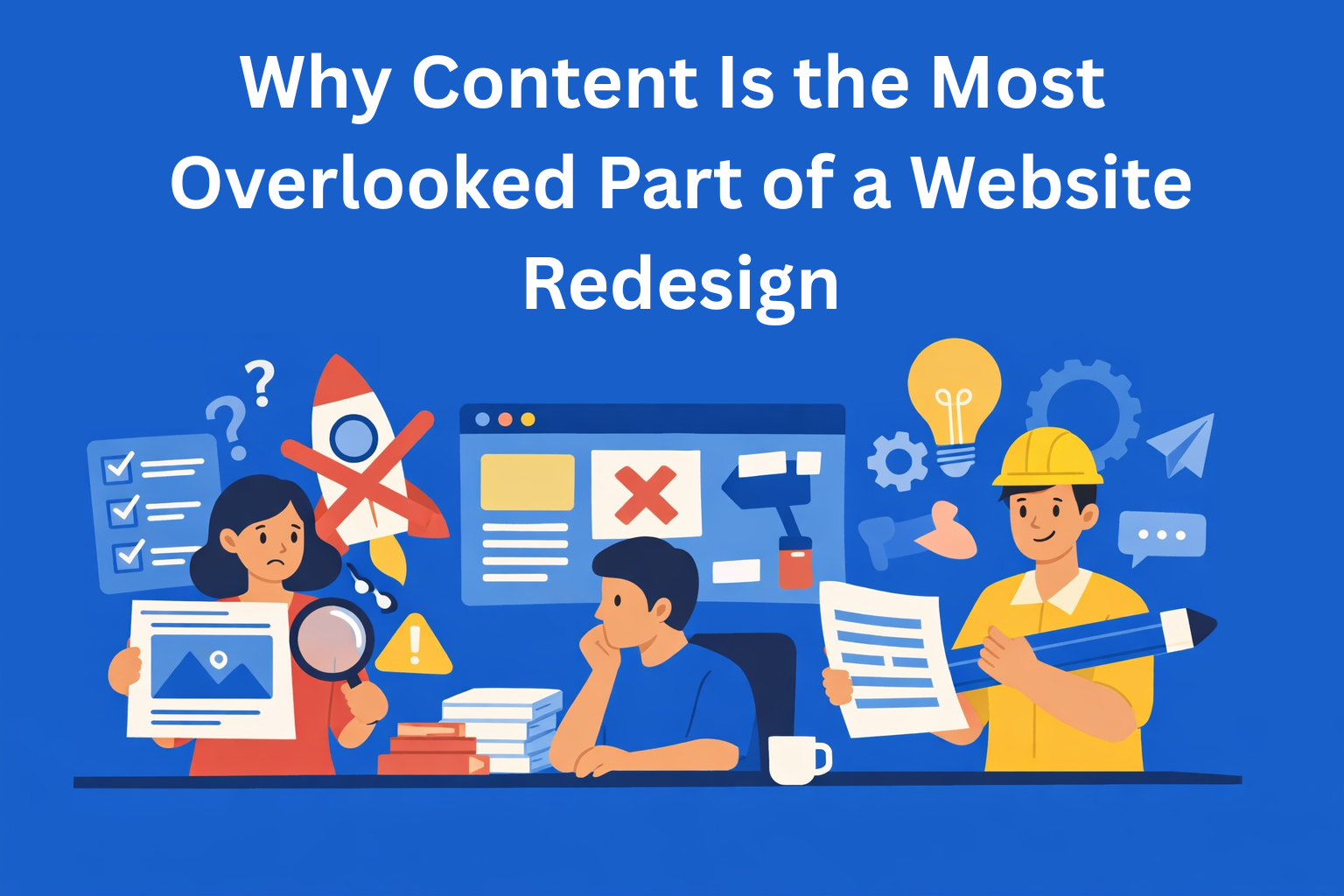
Every company eventually decides it’s time for a new website. An outdated design, an old color palette, a font that’s no longer trendy, and the project begins. An agency or developer is hired, colors are chosen, layouts, icons, and animations are designed. Months pass, the budget gets spent, and in the end, the website looks great.
And then… nothing.
Traffic stays the same. Sales don’t grow. The contact form is still empty.
The problem isn’t the design. The problem is that no one seriously thought about the content.
Key Takeaways
- Content is the most overlooked part of website redesigns - teams focus on design and development while leaving content for the last minute.
- Poor content planning leads to weak results - unclear messaging, bad SEO, and low conversions happen when content is rushed or reused.
- Content defines how users understand your offer - clear, specific messaging drives engagement more than visual design alone.
- Content-first design improves both UX and performance - creating content before design ensures structure, clarity, and better outcomes.
- A structured content process prevents delays - audits, clear ownership, and deadlines keep redesign projects on track.
Design Gets All the Attention (and All the Budget)
When a company decides to do a website redesign, the first thing they think about is how the site will look. They look at competitors, gather ideas, and create a design plan. The designer opens Figma and starts designing.
And the content? "We’ll handle that later."
And that "later" almost never comes on time. Time and money go into design and development, deadlines arrive, and in the end, the old text is simply copied into the new site. Sometimes even placeholder text like "Your headline goes here" stays until launch.
This isn’t an exception. This is the rule.
Why Content Always Gets Pushed to the End
There are several reasons why content strategy always ends up at the bottom of the priority list.
- The first reason is that content seems "easier" than design or code. Everyone thinks they can write website text. You write a few sentences about the company, add contact details, and that’s it. Because of this mindset, content writing gets pushed to the last minute and handed to someone who already has "too much work".
- The second reason is the assumption that old text can just be reused. If the website worked for five years with the same content, why change it? This sounds logical, but it’s wrong. Old content was created in a different context, for a different audience, without thinking about how Google reads it.
- The third reason might be the most important, no one knows whose job it is. Marketing thinks it’s UX. UX thinks it’s marketing. The client thinks the agency handles it. The agency thinks the client provides the content. And in the end, everyone waits for each other.
What Happens When a Website Launches Without a Content Plan
The consequences are real and expensive.
The first and most obvious problem is this: the design is created for a short piece of text, but then a much longer text arrives. And no one wants to change the design. So the text gets squeezed, reduced, or partly deleted. In the end, the message is no longer clear, and the user doesn’t understand what the company actually offers.
The second consequence is SEO. If you don’t have a content plan, you won’t think about what people search for on Google. The site can be fast and visually appealing, but if it doesn’t have clear and useful content, Google won’t show it to people. In the end, you get a new website, but without better results.
The third consequence is losing visitors. People decide very quickly, often in just a few seconds. In that time, they don’t look at colors or fonts, they read the headline and the first sentence. If that doesn’t clearly explain what the company does and why it matters to them, they leave.
A good-looking website can attract a visitor. But only good content can keep them and make them take action, call, buy, or send an inquiry.
Content Is Not Just Text, It’s the Foundation of Everything
This is where we get to the core of the problem.
Most people think content is just text placed into a design. But content strategy is much more than that.
It’s a plan for what comes first, what matters most, and what the user needs to understand right away. In other words, what exactly you need to say so someone wants to click "Buy now".
Let’s imagine two websites selling the same product, for example, project management software.
The first website looks modern, with nice animations and professional images. But the homepage says: "An innovative solution for digital teams striving for success."
The second website is visually simpler. But the homepage says: "Finish projects on time. Without endless emails and digging through your inbox."
Which one will convert better? Almost certainly the second one. Because a clear, specific message beats a nice design every time.
This is called "content-first design". It means you create the content first, and then the design.
The designer doesn’t create empty boxes and then wonder what goes inside. They first know what needs to be said, and then design around it.
How to Do a Redesign Without Pushing Content to the End
This isn’t complicated. You just need to change the order of steps.
Start with a content audit. Before you begin designing, look at what you already have on your website.
Go through your pages and texts. See what works and what needs to change. Look at what people search for most often.
This doesn’t take long, you can do it in a few days. And after that, you clearly know where you’re starting from.
Define your message before design. What does the company offer? To whom? Why is it better than the competition?
These three questions need clear answers before the first pixel is designed. From these answers, you build your messaging hierarchy, what comes first, what comes next, and what supports your claims.
Include someone responsible for content from the start. A copywriter or content strategist shouldn’t get involved in the last week before launch.
They should be part of the kick-off meeting, understand the project, the audience, and the goals. That’s the only way they can create content that actually works.
Design with real text, not placeholder text. "Lorem ipsum" can help for a quick start, but if you design with fake text, you don’t know how it will look when real content is added.
That’s why it’s better to use real text from the beginning. This helps you avoid surprises and last-minute changes.
Set a deadline for content just like you do for code. Every project has a "code freeze", a moment after which no more code changes are allowed.
Content should be treated the same way. A "content freeze" means everyone knows when the text must be finished, and there are no last-minute changes that delay the launch.
Conclusion
In the end, everyone wants the same result, a website that delivers business results. More inquiries, more sales, better rankings on Google.
Design is important. But design is just packaging. Content is what’s inside.
When a user visits your site, they don’t think: "Nice font." They think: "Can this company help me?"
And the answer to that question comes from the content, the headline, the subheadline, the first sentence, the service description, and customer testimonials.
If you’re planning a website redesign, start with content. Audit what you have. Decide what you want to say and to whom. Then call the designer.
A fresh coat of paint doesn’t fix a cracked wall. And a new color palette won’t fix a website that doesn’t tell the right story.