Building a Scalable Content Team: Roles, Tools, and Structure
Building a scalable content team isn’t about hiring more writers. It’s about clear roles, the right tools, and a structure that supports growth. This blog explains how to build a content team that can scale while keeping quality, clarity, and efficiency.

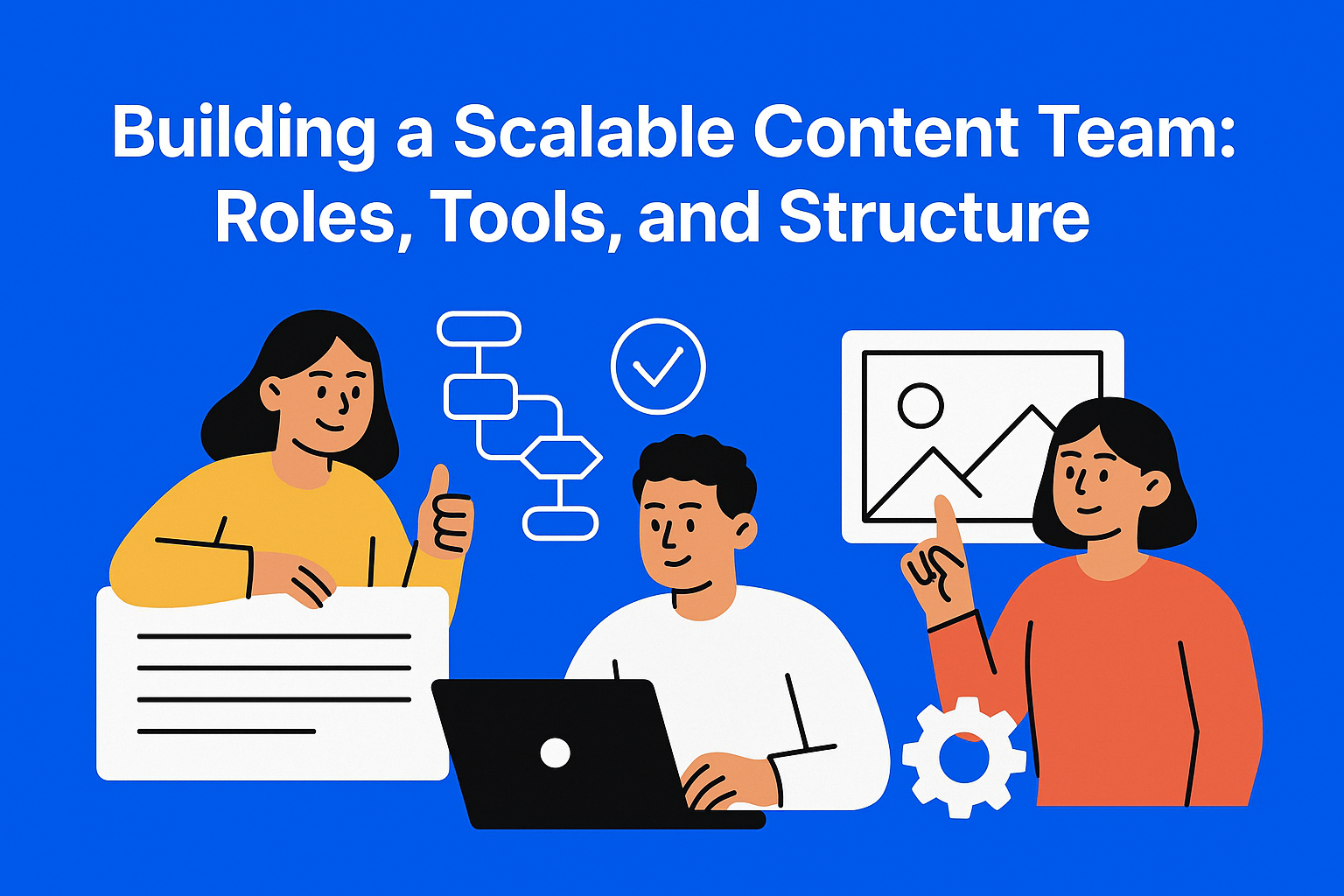
At the beginning, most content teams work in a fairly simple way. One or two people write content, someone reviews it, and it gets published. Everything goes according to plan, until the team starts to grow. That’s when problems appear: who is responsible for what, where the latest version of a document is, why the same content is being worked on twice, and why everything suddenly takes longer than before.
Building a scalable content team is not just about hiring more writers. A scalable content team is one that can produce more content while keeping quality high, without spending more time than is realistically necessary. For that to be possible, you need clearly defined roles, the right tools, and a working structure that supports growth.
In this blog, I’ll explain what a scalable content team looks like, which roles are essential, which tools to use, and how to connect everything into a sustainable system that can grow together with the company.
Key Takeaways
- Scalability depends on systems, not people - a content team scales successfully only when processes, roles, and tools are stronger than any individual.
- Clear roles prevent chaos as teams grow - defined ownership across strategy, production, and operations keeps work moving without confusion.
- Structure enables speed, not bureaucracy - a simple, visible workflow helps teams move faster by removing guesswork and delays.
- General tools break down at scale - scattered docs, messages, and statuses slow teams down once more people are involved.
- Centralized platforms make growth sustainable - tools like EasyContent keep content, workflows, roles, and visibility in one place, allowing teams to grow without losing quality.
What “Scalable” Really Means for a Content Team
When people talk about scaling, they usually think about more content, more channels, and more people. However, when it comes to a content team, scaling actually means something different.
A scalable content team is a team that can bring in new members without losing control or clarity. New people can quickly understand how the team works, where content lives, what the priorities are, and what is expected from them. In other words, the system is stronger than any individual.
On the other hand, non-scalable teams often rely on one or two key people who “know everything.” While they are present, the team works. When they are not, work slows down or completely stops, which is not sustainable in the long run.
A clear content team structure allows work to continue regardless of who is currently involved. Processes are clear, tools are centralized, and responsibilities are transparent.
Core Roles in a Scalable Content Team
One of the most common mistakes teams make is having unclear roles. People do “a bit of everything,” but no one is truly responsible for anything. A scalable content team requires clear roles, even if one person covers several of them at the beginning.
Content Strategy & Ownership
Every content team needs someone who sees the bigger picture. This is usually a Content Lead or Head of Content.
This role is responsible for:
- deciding the overall direction of content
- setting clear goals
- deciding which topics are a priority
- connecting content with company goals
Without this role, content teams often create a lot of content that looks good but doesn’t deliver clear results. In a scalable content team, there is always a person who makes key decisions and is clearly responsible for the content.
Content Production Roles
The most visible part of any content team is the writers.
Writers can be internal team members or external collaborators. For a team to be scalable, it’s important that writers do not depend on verbal explanations or ad‑hoc messages. Clear briefs, guidelines, and tools make it possible to maintain quality even as the number of writers grows.
Editors are often overlooked, but they are essential for maintaining quality. Their role is not just fixing grammar, but making sure the message is clear, the style is consistent, and the content feels cohesive.
Without editors, scaling almost always leads to a drop in quality.
Operational & Support Roles
As a content team grows, operational roles become more important.
Content Operations or a Content Project Manager is the person who makes sure work moves according to plan, tracking content status, deadlines, and any issues in the process. Thanks to this role, writers and editors can focus on writing and quality instead of coordination.
Design and publishing are also important. Visuals and distribution should not be an afterthought. In a scalable content team, it’s clear in advance who is responsible for design and who handles publishing and promotion.
The Structure: How Work Actually Flows Through the Team
Without a clear structure, even the best people and tools won’t help. The content team structure defines how an idea turns into published content.
A simple content workflow can look like this:
- idea
- content brief
- drafting
- review and editing
- approval
- publishing
- content reuse
Each step needs a person responsible for it. When that’s missing, people wait on each other and no one knows where the problem is.
A good content structure doesn’t slow the team down. On the contrary, it reduces confusion and enables faster work because everyone knows what comes next and what is expected of them.
Tools That Enable Scale (Instead of Slowing You Down)
Why General Tools Stop Working at Scale
In the beginning, teams often use tools like Google Docs, Slack, and various task managers. That’s perfectly fine while the team is small.
Problems start when content, comments, and statuses are scattered across multiple tools. People waste time searching for information, checking versions, and asking the same questions over and over again.
What a Scalable Content Tool Should Actually Do
A tool that supports a scalable content team should:
- centralize all content
- provide clear statuses (what’s in progress, what’s waiting, what’s published)
- support collaboration without endless messages
- make onboarding new team members easier
How EasyContent Fits Into a Scalable Content Setup
EasyContent is an example of a tool designed specifically for these needs. Instead of content living in many different places, EasyContent allows the entire content workflow to live in one place, from idea to publication.
With clearly defined roles, approvals, and notifications, teams can work faster with fewer misunderstandings. This becomes especially important as the content team grows and more people get involved.
Processes That Keep Quality High as Output Grows
Processes often have a bad reputation because they’re associated with bureaucracy. In reality, good processes protect both people and quality.
Key processes in a scalable content team include:
- standardized content briefs
- a clear review and approval flow
- clear feedback rules
When processes are well defined, writers know what’s expected of them, editors know how to give feedback, and managers have visibility into the entire system.
Scaling the Team Over Time (Without Rebuilding Everything)
Scaling doesn’t happen overnight. Teams usually grow gradually, from 2 to 5 people, and then to 10 or more.
It’s important to understand that not everything changes. The core principles stay the same: clear roles, centralized tools, and defined processes. What does change is that things become more complex, and it becomes necessary to have a better overview of the entire process.
If you keep adding people but the same problems remain, the issue is probably not capacity, but the system.
Common Mistakes Teams Make When Trying to Scale
The most common mistakes content teams make include:
- people join the team, but it’s unclear who is responsible for what
- tools are used without agreed ways of working
- relying on individuals instead of a system
- it’s unclear who makes final decisions
Recognizing these mistakes early can save a lot of time, energy, and frustration.
Conclusion
A scalable content team is not the result of luck or a large budget. It’s the result of a well‑thought‑out system where people, tools, and processes work together.
When you have a clear content team structure, the right content tools like EasyContent, and simple processes, growth becomes natural instead of stressful.
Instead of constantly reacting to problems, build a system that prevents them. That’s the foundation of a long‑term, sustainable, and scalable content team.